Human demonstrations
Complete task sequences performed by people in approved household, workplace, technical or field environments.


Robotics and embodied AI programs need observations that preserve how people interact with tools, objects and environments. AMSYNK structures collection around the target task, viewpoints, devices, sensors, metadata and acceptance criteria.
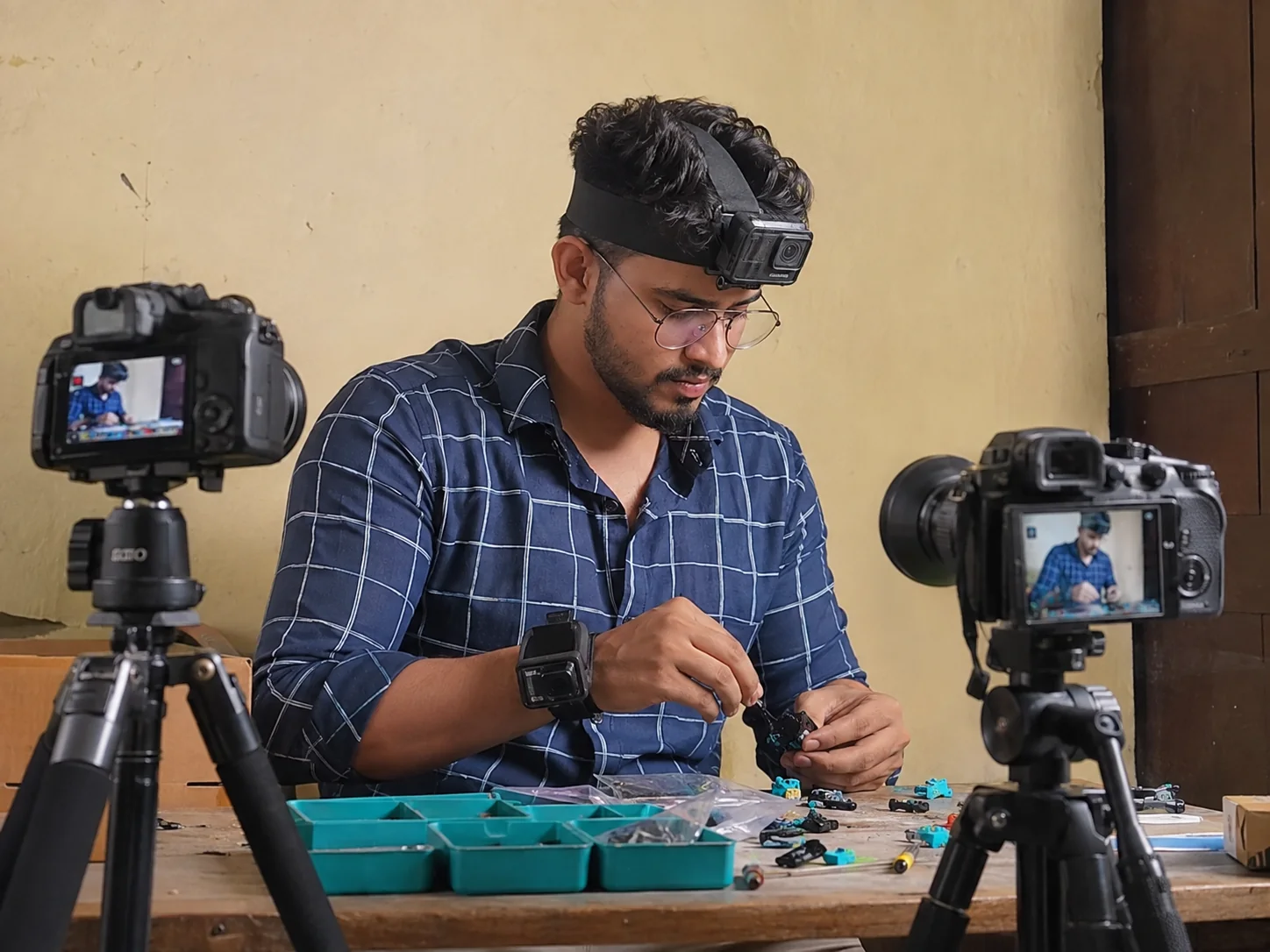
Complete task sequences performed by people in approved household, workplace, technical or field environments.
Egocentric and external camera views when the model or evaluation workflow requires spatial context.
Project-defined camera, audio, timestamp or sensor requirements can be incorporated when operationally feasible.
Structured task, environment, device, participant and outcome fields aligned to the client schema.
Acceptance rules vary by project, so the controls below are configured against the approved specification rather than treated as universal thresholds.
Robotics and embodied-AI requirements vary widely. The collection design should therefore begin with the task, observation requirements and temporal relationships rather than a generic video specification.
Define the task objective, initial state, successful completion state, acceptable variations and failure cases. This creates a consistent unit of collection and makes later review more defensible.
Specify which views, signals or contextual fields are actually required. Where a project calls for multiple cameras, device telemetry or other modalities, their availability and timing relationship should be proven during the pilot.
Record the factors that should vary and the factors that must stay controlled: workspace, tools, objects, lighting, operator behavior, task difficulty and safety constraints. Variation without metadata can make a dataset harder to interpret.
Decide whether incomplete tasks, retries, mistakes or unusual conditions should be rejected, retained with labels, or routed for review. This distinction is especially important when the learning objective includes recovery or edge cases.
The final package can include task recordings, multiple camera views, project-defined metadata, capture notes, QA records and manifests depending on the agreed program.