First-person task video
Head-mounted or wearable views showing hands, objects and task progression.


Capture human activity from the participant’s point of view while preserving the task context, hands, tools, objects and environment needed for AI training or evaluation.
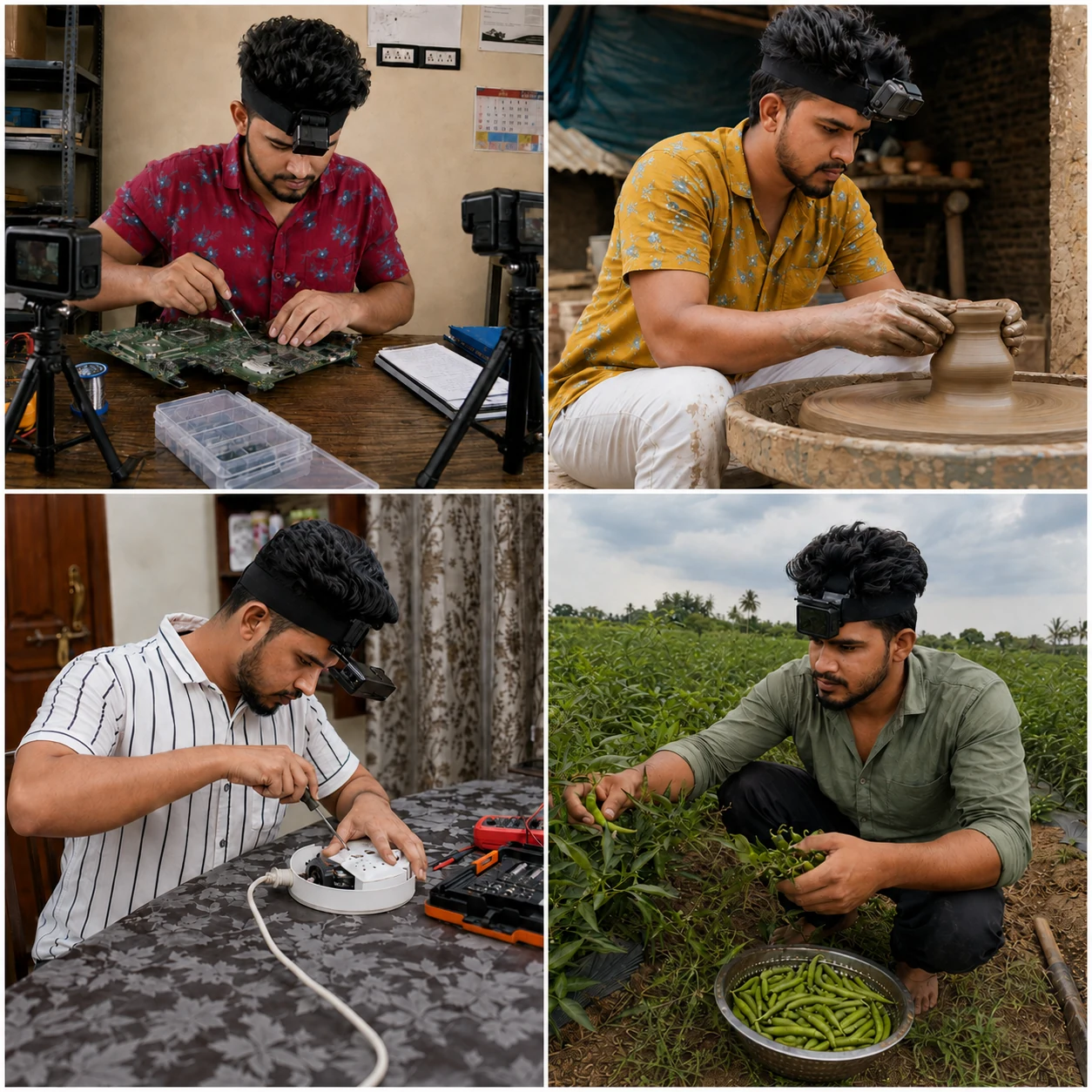
Head-mounted or wearable views showing hands, objects and task progression.
First-person video paired with fixed or operator-positioned external views when synchronized context is required.
Project-approved narration can describe actions, tools, objects or task state during recording.
Task ID, participant, environment, device, timestamps, category, review state and other client-defined fields.
Acceptance rules vary by project, so the controls below are configured against the approved specification rather than treated as universal thresholds.
Useful first-person data starts with a capture protocol that matches the model objective. These points should be resolved before participant onboarding or scale.
Define where the camera is worn or positioned, which parts of the hands and workspace must remain visible, and what counts as a complete task. A technically valid file can still be unusable if the critical action happens outside the required view.
Specify start and end conditions, interruptions, retries and whether narration is required. When narration is part of the protocol, define what should be described and how it should relate to visible actions rather than leaving workers to improvise.
When external views are required, define how recordings are aligned, how missing views are handled and which camera is authoritative for task timing. Synchronization requirements should be validated during the pilot rather than assumed at delivery.
Agree the task ID, session or participant fields, environment and device fields, review states and rejection reasons that must accompany each file. This makes rework traceable and prevents ambiguous batches later.
Depending on scope, delivery may include approved raw recordings, synchronized views, task metadata, quality notes, manifests and agreed naming or folder structures.