Document photography
Handwritten notes, forms, tables, posters, invoices, contracts and other approved document categories.


Document and image projects depend on more than volume. Pages or objects must match the assigned category, remain readable or visible, follow capture rules and carry the metadata required for downstream model training or evaluation.
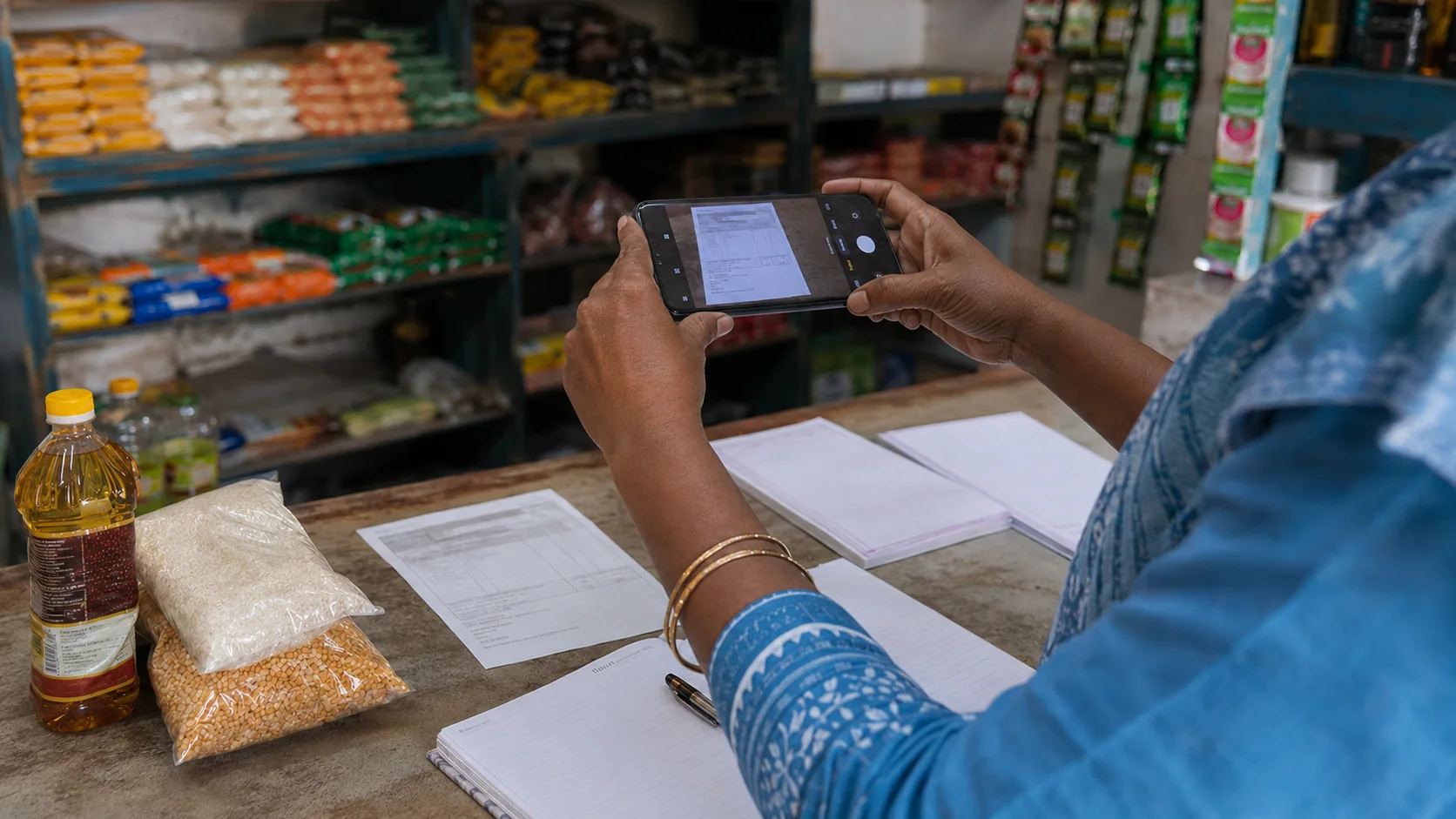
Handwritten notes, forms, tables, posters, invoices, contracts and other approved document categories.
Regional-language or script requirements can be separated into controlled collection batches.
Project-defined objects, environments, scenes or interactions captured under specified conditions.
Language, category, task, source context, device, environment and review status when required by the schema.
Acceptance rules vary by project, so the controls below are configured against the approved specification rather than treated as universal thresholds.
For document-photo collection, the fastest quality improvement is usually a clean retake at the source. Trying to rescue a poor capture after the fact introduces avoidable ambiguity.
Keep the entire page and all four corners inside the frame. Headers, footers, rows, columns and other important content should not be cut off.
Text, numbers, signatures, tables and figures should be sharp enough to review without guessing. Blur, soft focus and content that is too small to interpret should be retaken.
Use even exposure and avoid glare, reflections, heavy shadows and strong perspective distortion. A straight or near top-down view is easier to validate and process.
Keep assigned language batches and document categories separate. Wrong-language pages, unrelated documents and duplicate captures should be removed before upload.
A delivery may include approved source images, document-category metadata, language labels, quality status, manifests and the naming structure agreed for the project.