Language & speaker profile
Language, dialect, geography, demographic or domain requirements defined by the project.


Audio projects vary significantly by language, channel structure, environment, recording device, file format, speaker profile and transcript or metadata requirements. AMSYNK starts by defining those specifications before sourcing or collection begins.
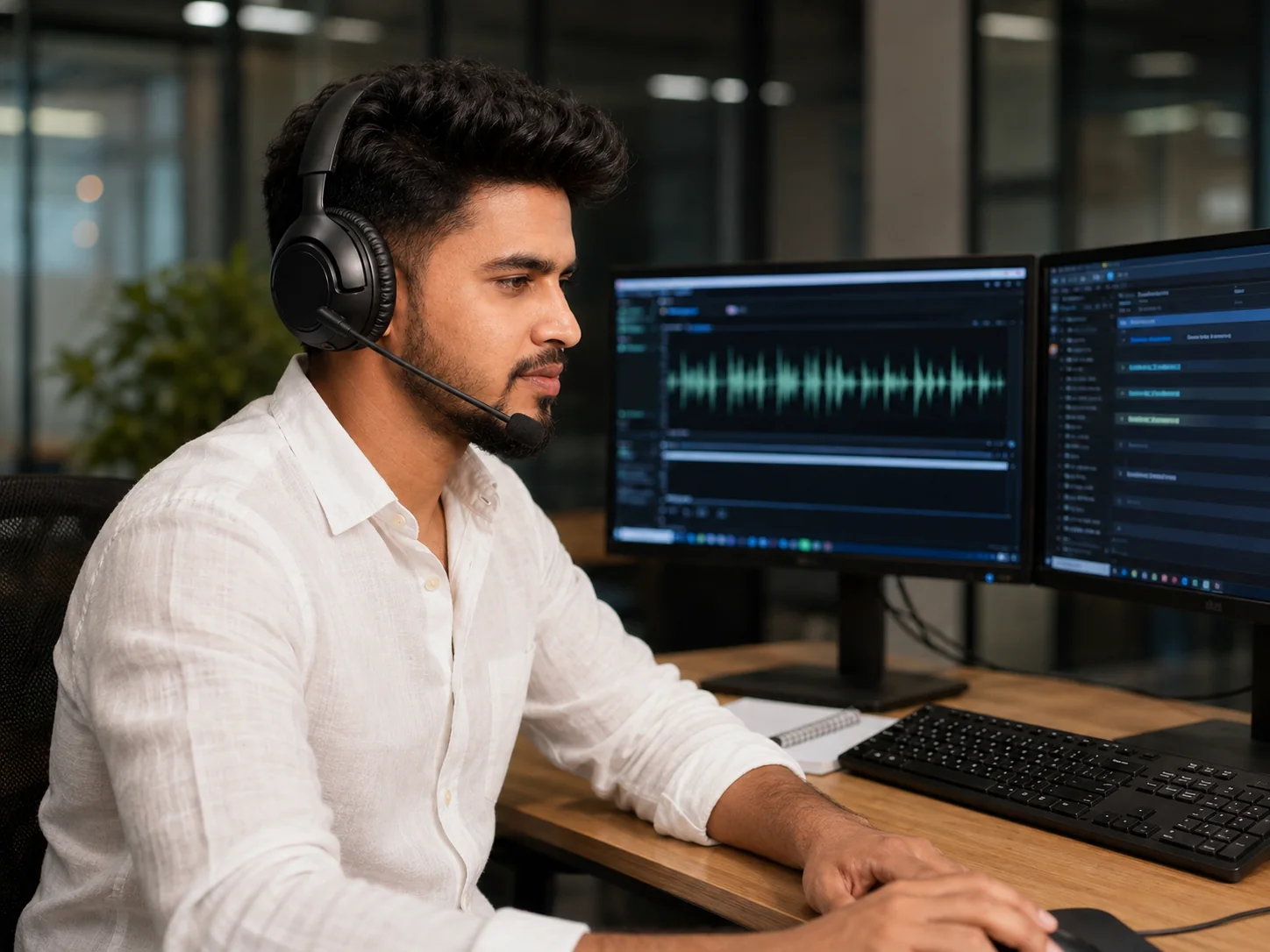
Language, dialect, geography, demographic or domain requirements defined by the project.
Sample rate, bit depth, mono or multi-channel requirements, device conditions and file format.
Prompted speech, conversational recordings, domain-specific interactions or other approved audio scenarios.
Speaker/session metadata, timestamps, transcript requirements and file-level identifiers when included in scope.
Acceptance rules vary by project, so the controls below are configured against the approved specification rather than treated as universal thresholds.
Collection quality depends on matching the recording protocol to the acoustic and modeling requirement. File format alone is not enough.
Define language, dialect or accent requirements, speaker eligibility, demographic balancing where appropriate, and whether prompts are read, spontaneous or task-based.
Specify channel layout, sample rate, bit depth, codec or container, microphone or device constraints and any telephony characteristics before collection starts. These properties should be checked automatically where possible.
State whether the project requires controlled recording, natural background noise, specific environments, conversational overlap or other acoustic variation. Unplanned noise and intentional environmental diversity are not the same thing.
If transcripts are required, define punctuation, normalization, speaker turns, timestamps and treatment of non-speech events. Consent and usage-right requirements should also be settled before production.
Delivery can include approved audio files, transcripts where required, speaker or session metadata, quality records and an agreed file/folder structure.